
Atelier
A QAF is not assembled; it is finished. The platform arrives complete and proven. What happens next is the House.
Six stations
Receiving
Each platform is checked against its build sheet, charged, road-tested, and given a QAF build number that follows it for life.
Strip
Bumpers, trim, seats, door cards and badges come off. What we re-use is tagged; what we replace leaves the building.
Body
Panels are fitted where the model calls for them, seams sealed, and the body prepared and painted two-tone in a dedicated booth.
Cabin
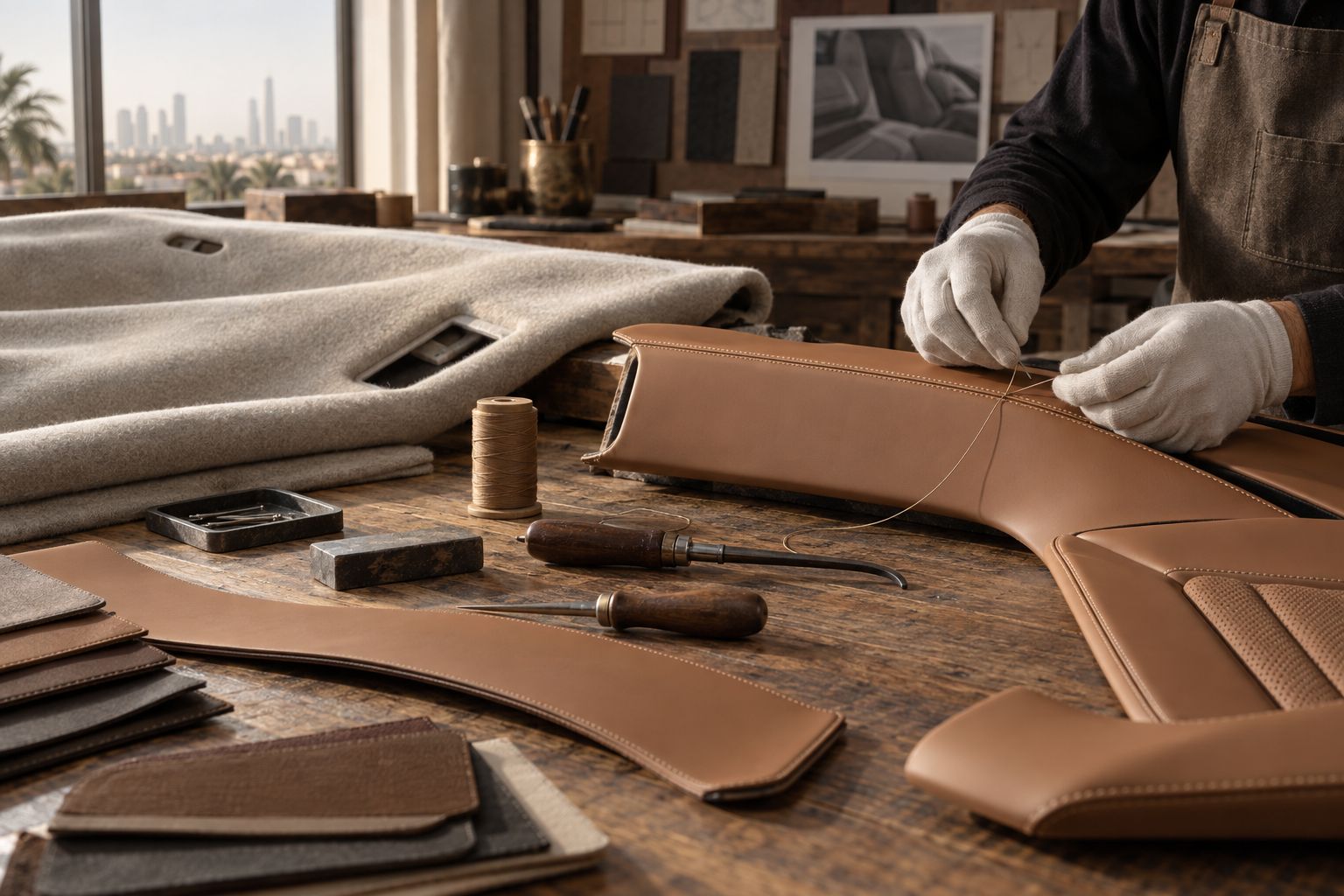
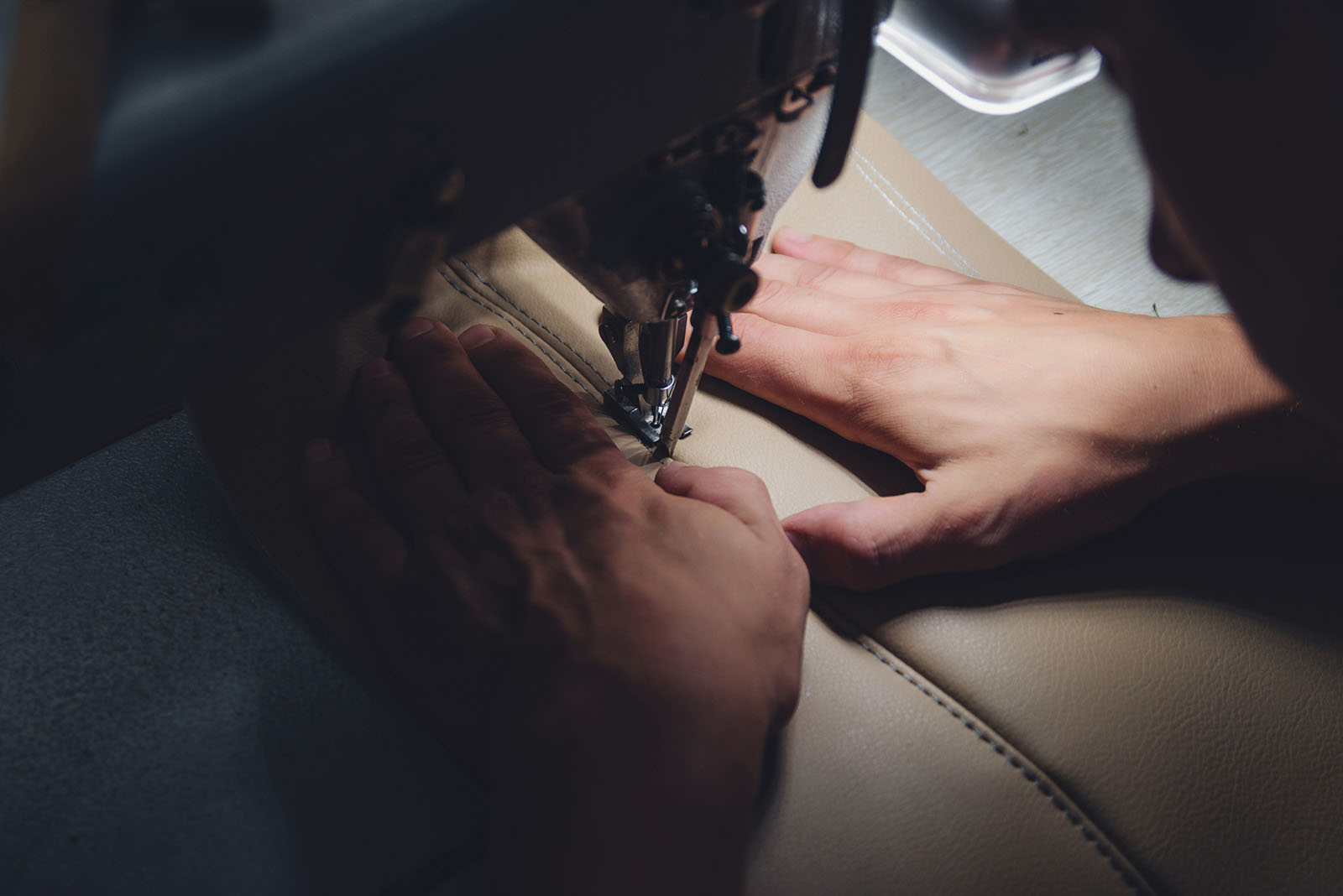
Insulation, headliner, fascia, seats and door cards, from subassemblies made to our own patterns.
Climate and electrics
The uprated cooling system, the CCS2 inlet, telematics and regional software, tested at temperature.
End of line
Inspection against the model's checklist by someone who did not build the vehicle, a road test, water and dust test, photographs, and the container.
Hours of hand
The three models are separated by what the atelier touches, and for how long.
Hours are targets for a settled line. The first vehicles take longer, and we say so.
One checklist
Swiss engineering oversight, one checklist per model, and a record — photographs, torque values, test results — kept against the build number for the life of the vehicle.
Every supplier is audited before first delivery and re-audited on a schedule. Every finished vehicle is inspected by someone who did not build it. In the Kingdom, a pre-delivery inspection with our after-sales partner closes the loop before a vehicle goes into service. The nine-thousandth vehicle is inspected to the same sheet as the first.