Design
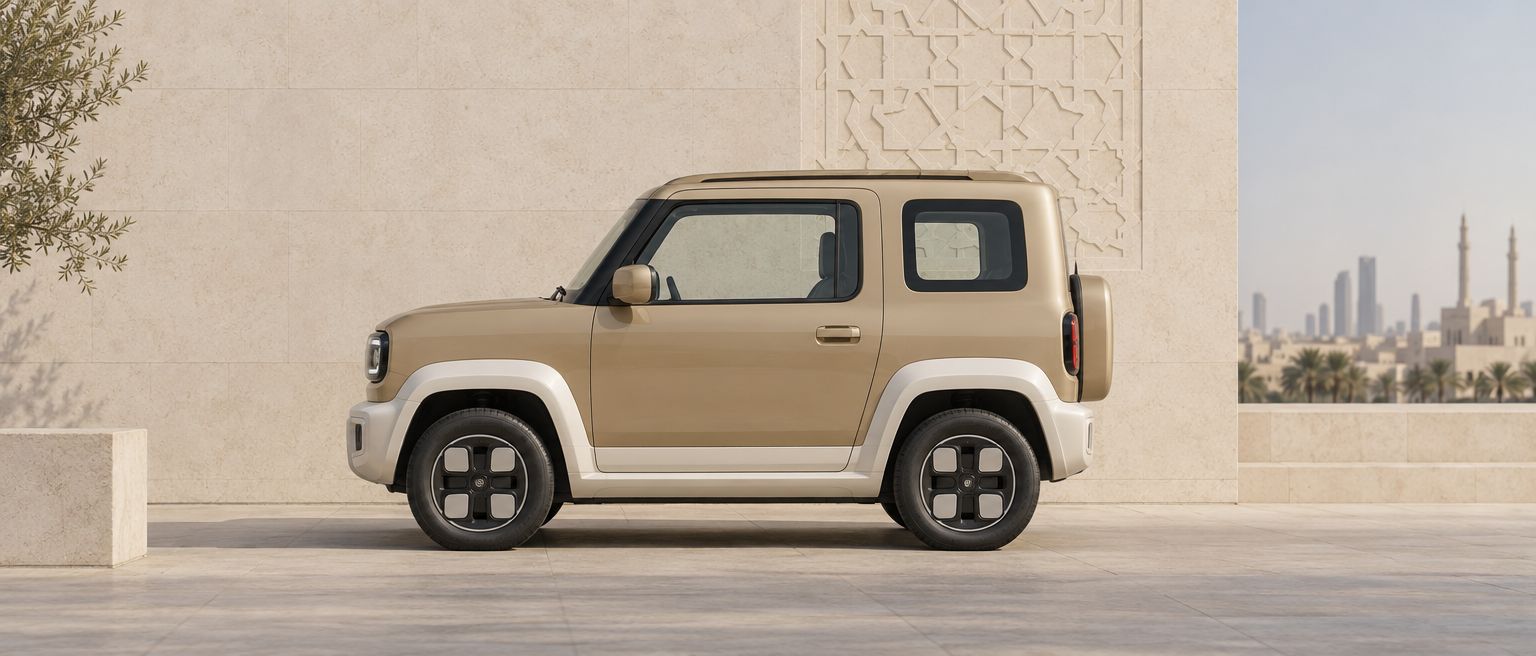
Upright, compact, unmistakably a small off-road vehicle, and finished with restraint.
Three rules
Straight where it can be
Square arches, a flat bonnet, an upright glasshouse. The proportions of a vehicle that turns in a courtyard and parks in a colonnade.
Two-tone, always
A sand or stone lower body under a pale roof, so the cabin stays cooler and the vehicle reads as considered rather than loud.
Brass only at the emblem
No chrome. The only bright metal on a QAF is the brass of the emblem on the tailgate — and, on the Emerald, the sill and the wheel centres.
Belonging to the place
The buildings of the new quarter step and slope toward the Haram in pale stone. A QAF should look as if it were drawn in the same room: sand or stone below the belt, bone above, straight where it can be, and nothing that shines but the emblem. It is a vehicle that belongs to a plaza, not one that arrives in it.
Inside
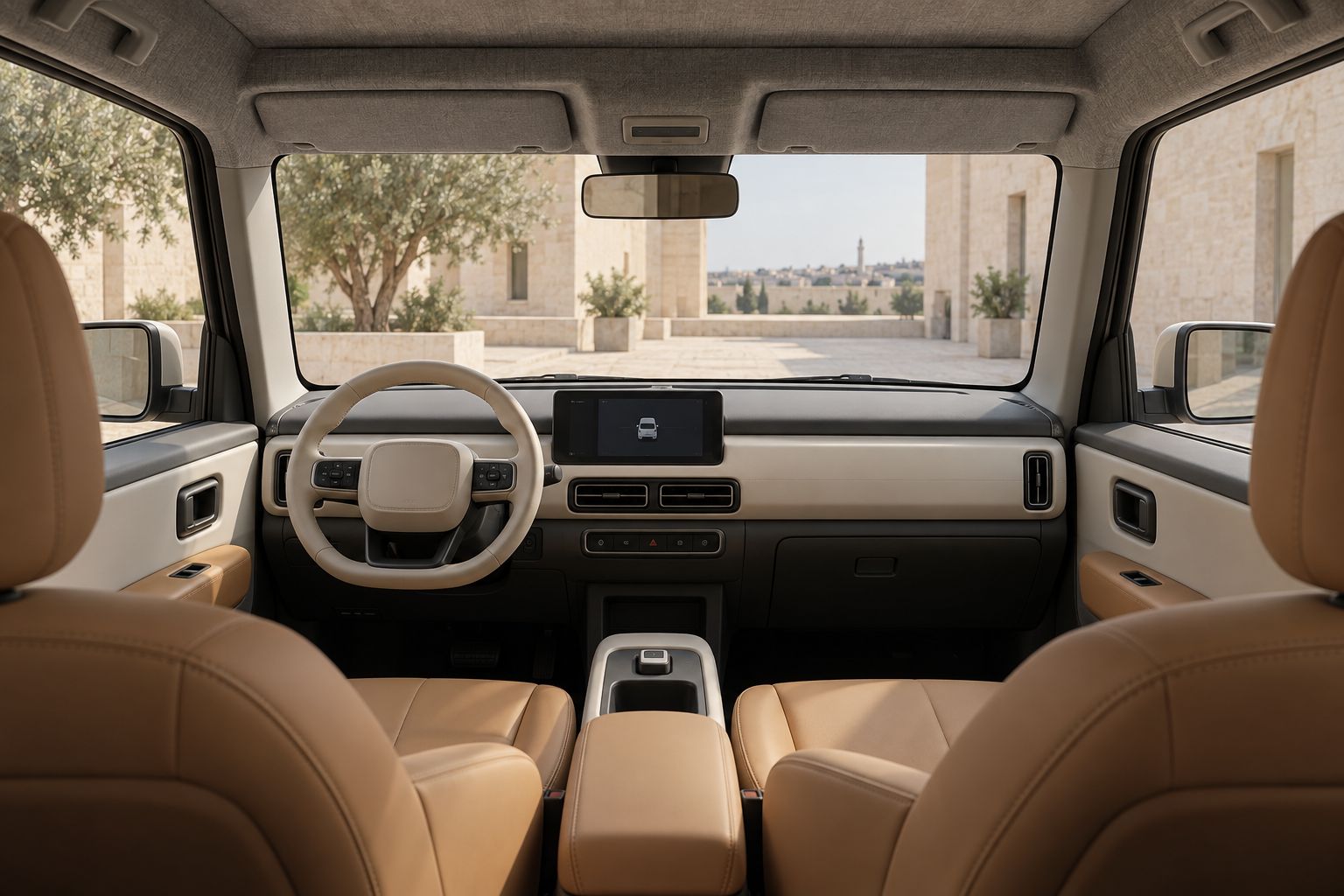
The reference points are a good hotel lobby rather than a sports car: matte surfaces, a single warm material per model, and nothing that glares in strong sun.
The seat is the product. Everything else is there to keep it cool and quiet. On the guest models, the rear seat is where the design begins — the vents, the console, the controls, the glass all serve whoever is sitting there.

The mark
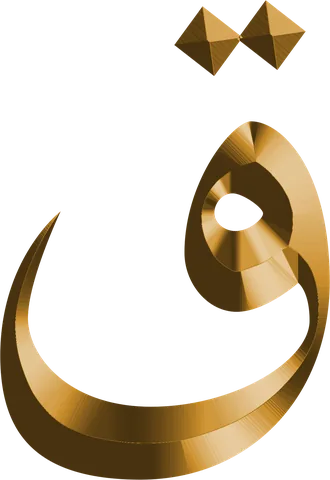
The emblem is the isolated Arabic letter ق drawn as one sweep, its two dots cut as facets above it, in gold. The wordmark sets the three Latin letters in a classical serif, the tail of the Q running under the A. On the vehicle the emblem is cast in brass on a black base, forty millimetres high, on the tailgate; the wordmark is engraved on the sill plate, and the model name on a small plate on the B-pillar.